
THE GEMHOOD EDITORIAL LIBRARY
Euchroite gemstone guide
Euchroite (Cu₂(AsO₄)(OH)·3H₂O), Mohs 3.5–4: an illustrated guide to crystal habit, identification, origins, collecting and safe care.
Gem facts · Quality considerations · Care & meaning
 A study in colour and character
Every shade has a story.
Typical appearances for Euchroite. Natural stones vary, and lighting or treatment can change their appearance.
Where Euchroite is found
Slovakia; Romania
 Slovakia
 Romania
How it forms
Uncommon secondary copper arsenate found in oxidised copper-bearing deposits
These are representative geological or commercial sources, not certified provenance for an individual stone. Country of origin should be substantiated independently when relevant to value.
01 / THE GEM AT A GLANCE
What is Euchroite?
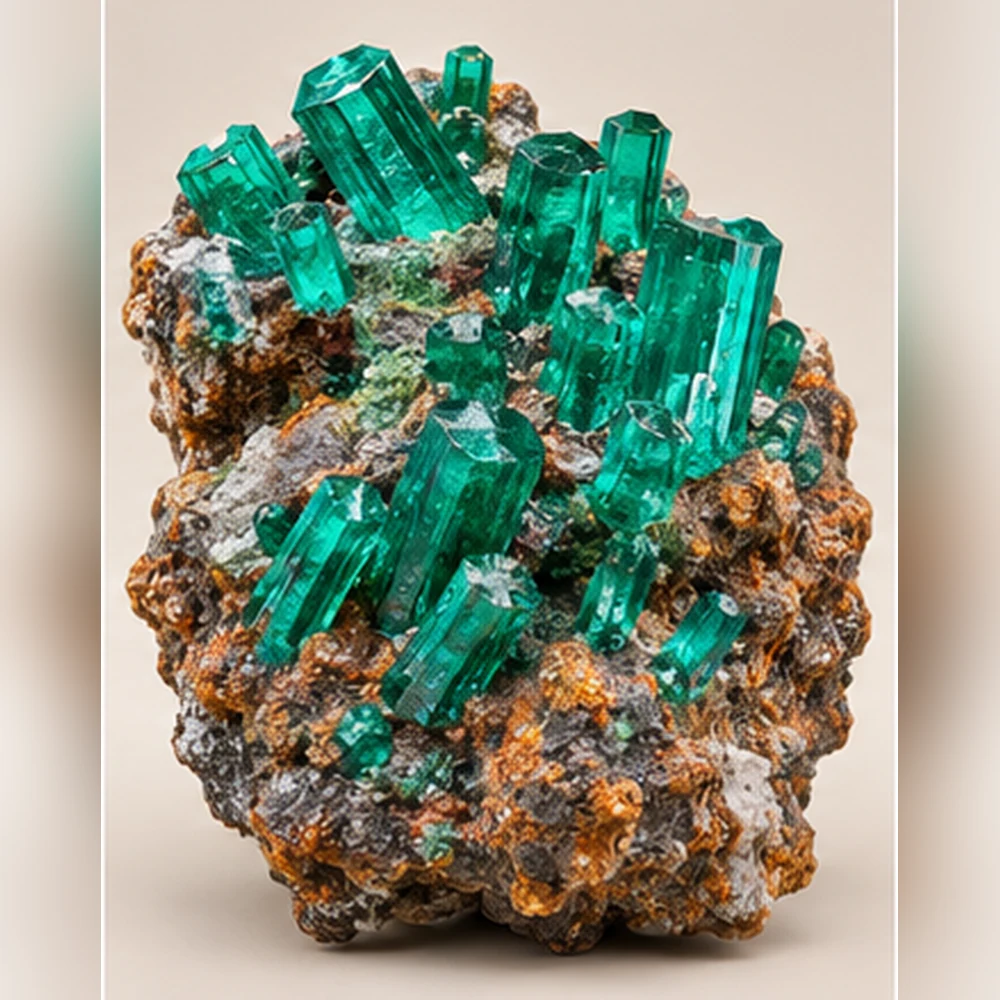
Euchroite is a naturally occurring hydrated copper arsenate hydroxide represented by Cu₂(AsO₄)(OH)·3H₂O, with a reported Mohs hardness of 3.5–4. It commonly appears as Brilliant transparent emerald-green short prisms with glassy faces on brown oxidised copper-ore matrix. Its documented colours include Bright emerald green, leek green. Uncommon secondary copper arsenate found in oxidised copper-bearing deposits.
Euchroite is a naturally occurring hydrated copper arsenate hydroxide represented by Cu₂(AsO₄)(OH)·3H₂O, with a reported Mohs hardness of 3.5–4. It commonly appears as Brilliant transparent emerald-green short prisms with glassy faces on brown oxidised copper-ore matrix. Its documented colours include Bright emerald green, leek green. Uncommon secondary copper arsenate found in oxidised copper-bearing deposits. Typical specimen appearance: Brilliant transparent emerald-green short prisms with glassy faces on brown oxidised copper-ore matrix. Reported reference localities include Slovakia; Romania. These are general occurrence areas, not proof of origin for any photographed or offered specimen. Emerald-green crystal colour can be confused with dioptase, olivenite or other copper minerals; euchroite contains arsenate and needs mineralogical verification. It can alter toward related copper arsenates; stable storage and honest labelling are important. Require photographs of the exact object, scale, an accurate species label, evidence of any claimed locality, and disclosure of treatment, repairs and synthetic or coated substitutes. Arsenic-bearing specimen: do not polish, grind, powder or soak; use enclosed display storage, wash hands and keep away from food and children. Keep away from water immersion and cleaning chemicals; use only gentle dry dusting, preserving fragile prisms and hydration state. Collectible crystals only; the arsenate chemistry and brittleness make this inappropriate for skin-contact jewellery. The GemHood picture is a generated educational illustration; it is not an authenticated specimen, laboratory result or sale item. The name is based on Greek for beautiful colour, reflecting its intense green crystals. Euchroite specimens vary in colour, crystal morphology and apparent quality depending on geological setting, weathering and specimen preparation. Avoid making trade, treatment or authenticity decisions based solely on a generated reference image. For valuable or ambiguous samples, consult an established mineralogical reference and seek species-level testing from a competent mineral professional. Price depends on verified rarity, damage, crystal habit, aesthetics and provenance rather than a generic mineral name alone. When shopping online, compare several sharp pictures of the actual item, examine damage at the terminations, check dimensions and weight, and confirm whether any labels identify an associated mineral rather than the main specimen. Mineral hardness reflects scratch resistance and does not establish toughness, chemical stability or safe skin contact. Collector minerals must not be used as drinking-water additives, dietary products or therapies.
02 / LOOK CLOSER
Colour, appearance and quality
Typical specimen appearance: Brilliant transparent emerald-green short prisms with glassy faces on brown oxidised copper-ore matrix. Reported reference localities include Slovakia; Romania. These are general occurrence areas, not proof of origin for any photographed or offered specimen.
Before you choose a stone
Compare images taken in more than one lighting condition, ask for views of the actual item and check how the cut and setting change its appearance. A gemstone type is not a standard grade: each natural specimen has its own colour, inclusions and workmanship.
THE GEMHOOD BUYER'S FIELD NOTES
How to choose Euchroite: three checks
- 01
Emerald-green crystal colour can be confused with dioptase, olivenite or other copper minerals; euchroite contains arsenate and needs mineralogical verification.
- 02
Check condition, actual photos, species and locality documentation, measurements and any treatment. It can alter toward related copper arsenates; stable storage and honest labelling are important.
Arsenic-bearing specimen: do not polish, grind, powder or soak; use enclosed display storage, wash hands and keep away from food and children.
Collectible crystals only; the arsenate chemistry and brittleness make this inappropriate for skin-contact jewellery.
These notes describe typical gem material and trade practices. They do not independently grade or identify a specific item offered for sale.
03 / BUY WITH CONFIDENCE
Natural, laboratory-grown, treated or imitation?
Emerald-green crystal colour can be confused with dioptase, olivenite or other copper minerals; euchroite contains arsenate and needs mineralogical verification. It can alter toward related copper arsenates; stable storage and honest labelling are important. Require photographs of the exact object, scale, an accurate species label, evidence of any claimed locality, and disclosure of treatment, repairs and synthetic or coated substitutes.
These distinctions should be clear in the listing for any particular gem. Treatments are not automatically unacceptable, but an undisclosed treatment, vague mineral identity or unsupported origin claim prevents an informed purchase. Where material identity materially affects value, an independent gemological identification report may be worth considering.
A CLOSER LOOK
Composition, hardness and crystal science
Euchroite is a naturally occurring hydrated copper arsenate hydroxide represented by Cu₂(AsO₄)(OH)·3H₂O, with a reported Mohs hardness of 3.5–4. It commonly appears as Brilliant transparent emerald-green short prisms with glassy faces on brown oxidised copper-ore matrix. Its documented colours include Bright emerald green, leek green. Uncommon secondary copper arsenate found in oxidised copper-bearing deposits.
The formula Cu₂(AsO₄)(OH)·3H₂O is representative, and impurities or compositional substitution may vary with the geological occurrence. A Mohs rating of 3.5–4 measures scratch resistance only; inspect cleavage, crystal terminations and mechanical fragility separately.
A CLOSER LOOK
Appearance, colour and typical crystal habit
Euchroite is described by Brilliant transparent emerald-green short prisms with glassy faces on brown oxidised copper-ore matrix. Reported colours include Bright emerald green, leek green.
Emerald-green crystal colour can be confused with dioptase, olivenite or other copper minerals; euchroite contains arsenate and needs mineralogical verification. It can alter toward related copper arsenates; stable storage and honest labelling are important. Require photographs of the exact object, scale, an accurate species label, evidence of any claimed locality, and disclosure of treatment, repairs and synthetic or coated substitutes.
A CLOSER LOOK
Geological formation and host-rock setting
Uncommon secondary copper arsenate found in oxidised copper-bearing deposits
Reference occurrence areas: Slovakia; Romania. Reported reference localities, not independently verified provenance for a listed product. A location on a generic educational page is not the same as a documented specimen chain of custody.
A CLOSER LOOK
History, nomenclature and frequently mistaken species
The name is based on Greek for beautiful colour, reflecting its intense green crystals.
It can alter toward related copper arsenates; stable storage and honest labelling are important.
Compare visually similar materials such as dioptase; olivenite; emerald-green glass. A visual match is only a starting point, not mineralogical authentication.
A CLOSER LOOK
Identification and trustworthy mineral buying
Emerald-green crystal colour can be confused with dioptase, olivenite or other copper minerals; euchroite contains arsenate and needs mineralogical verification. It can alter toward related copper arsenates; stable storage and honest labelling are important. Require photographs of the exact object, scale, an accurate species label, evidence of any claimed locality, and disclosure of treatment, repairs and synthetic or coated substitutes.
Ask for actual measured dimensions and multiple current photos; confirm any restoration, colouring, backing, polished surface or matrix attachment. For expensive material, request a trusted independent opinion rather than relying on promotional images.
A CLOSER LOOK
Collection display and suitability for jewellery
Collectible crystals only; the arsenate chemistry and brittleness make this inappropriate for skin-contact jewellery. The GemHood picture is a generated educational illustration; it is not an authenticated specimen, laboratory result or sale item.
Transport specimens in individual padded boxes; support loose blades, fans or plates from beneath their host matrix, and never rely solely on the Mohs rating to decide how the specimen should be worn.
A CLOSER LOOK
Cleaning, stability and collector safety
Arsenic-bearing specimen: do not polish, grind, powder or soak; use enclosed display storage, wash hands and keep away from food and children. Keep away from water immersion and cleaning chemicals; use only gentle dry dusting, preserving fragile prisms and hydration state.
Use the least aggressive cleaning method that preserves the species and any associated matrix. Avoid ultrasonic and steam cleaning for fragile, altered, repaired or unknown specimens; wash hands after handling mineral dust or metal-bearing samples.
A CLOSER LOOK
Understanding the GemHood mineral illustration
The illustration is intended to suggest Bright emerald-green transparent crystals clustered on ochre matrix.
This is an original educational depiction, not an authenticated specimen photograph, lab finding or purchasable product. Natural examples differ substantially in shape and colour; do not use the illustration to establish species, treatment or provenance.
04 / WEAR IT WELL
Euchroite in jewellery
Collectible crystals only; the arsenate chemistry and brittleness make this inappropriate for skin-contact jewellery. The GemHood picture is a generated educational illustration; it is not an authenticated specimen, laboratory result or sale item.
05 / MAKE IT LAST
How to care for Euchroite
Arsenic-bearing specimen: do not polish, grind, powder or soak; use enclosed display storage, wash hands and keep away from food and children. Keep away from water immersion and cleaning chemicals; use only gentle dry dusting, preserving fragile prisms and hydration state.
One essential care distinction
Mohs hardness describes resistance to scratching, not resistance to breaking. Gemstones with cleavage, existing fractures, porous surfaces or fillings can need extra care regardless of their hardness number. If you do not know whether a piece has been treated, begin with the gentlest appropriate cleaning method.
06 / CULTURE & MEANING
History, heritage and symbolism
The name is based on Greek for beautiful colour, reflecting its intense green crystals.
Traditional meanings and spiritual associations are part of cultural storytelling. They are not evidence that a gemstone diagnoses, prevents or treats any medical condition.
GOOD QUESTIONS, CLEAR ANSWERS
Euchroite FAQs
What is Euchroite?
Euchroite is a hydrated copper arsenate hydroxide, commonly represented by Cu₂(AsO₄)(OH)·3H₂O. Typical appearance includes Brilliant transparent emerald-green short prisms with glassy faces on brown oxidised copper-ore matrix.
How hard is Euchroite?
A typical reported Mohs hardness is 3.5–4. Scratching resistance does not measure toughness, cleavage, safety or suitability for everyday wear.
What colour is natural Euchroite?
Reported colours include Bright emerald green, leek green. Lighting, matrix, mineral impurities and display settings can affect perceived colour.
Where does Euchroite form?
Uncommon secondary copper arsenate found in oxidised copper-bearing deposits Published occurrence areas include Slovakia; Romania, but these do not establish a sale item’s actual origin.
How can I identify Euchroite?
Emerald-green crystal colour can be confused with dioptase, olivenite or other copper minerals; euchroite contains arsenate and needs mineralogical verification. A mineral specialist may need to examine the particular specimen.
Can Euchroite be used for jewellery?
Collectible crystals only; the arsenate chemistry and brittleness make this inappropriate for skin-contact jewellery.
How should I clean Euchroite?
Keep away from water immersion and cleaning chemicals; use only gentle dry dusting, preserving fragile prisms and hydration state.
Is Euchroite safe to handle?
Arsenic-bearing specimen: do not polish, grind, powder or soak; use enclosed display storage, wash hands and keep away from food and children.
Is the GemHood Euchroite picture a real specimen?
No. It is an original generated educational illustration designed around typical Euchroite appearances. It is not a certified specimen photo, laboratory determination or a product for sale.
Which minerals can be confused with Euchroite?
Possible lookalikes include dioptase; olivenite; emerald-green glass. It can alter toward related copper arsenates; stable storage and honest labelling are important.
A NOTE FROM THE GEMHOOD EDITORIAL DESK
How to use this guide
We explain gemstone properties, known mining regions and customary treatments to help you shop more confidently. Each gemstone can vary in quality and individual provenance, so compare the actual jewellery listing and request supporting documentation if origin, treatment or natural-versus-laboratory-grown status affects your choice.
Our gemstone library is educational and does not act as a laboratory identification certificate. Independent gemological assessment is advisable for valuable or disputed claims.
EDITORIAL REFERENCES
Research and further reading
References describe mineral species and representative occurrences, not verification of any individual item for sale.
No matching jewellery is currently in stock. Explore the guide or browse our full collection.
Browse jewellery →UNDERSTAND THE DIFFERENCE
Compare Euchroite with similar gemstones
These stones can overlap in colour, appearance or jewellery use. The mineral identity, treatments and durability may be very different.
KEEP EXPLORING
Other gemstones to discover
Educational articles describe gemstone types and common trade practices. They are not individual gemological certificates, current price appraisals or medical advice.