
THE GEMHOOD EDITORIAL LIBRARY
Tiger's Eye gemstone guide
A golden-brown quartz gemstone valued for a mobile band of light called chatoyancy.
Gem facts · Quality considerations · Care & meaning
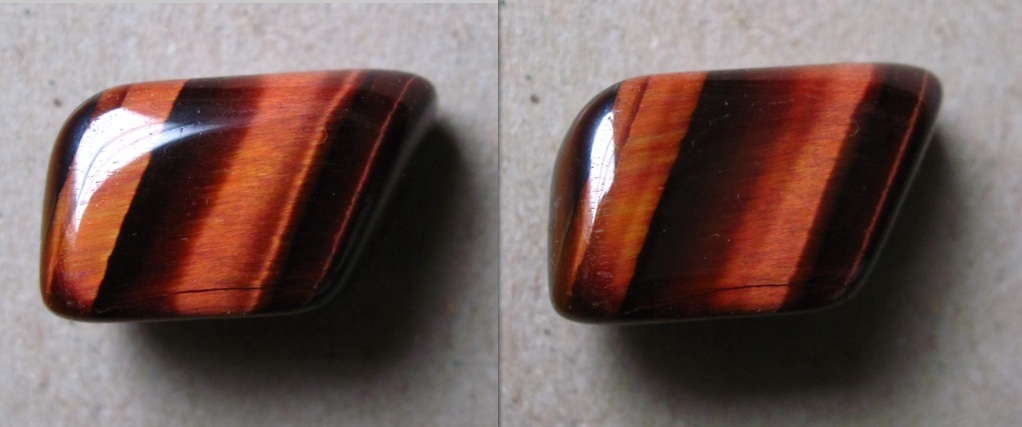 A study in colour and character
01 / THE GEM AT A GLANCE
What is Tiger's Eye?
Tiger's eye is a golden-brown quartz gemstone known for chatoyancy: a moving band of light across a polished cabochon. The silky effect relates to fibrous structures preserved during mineral alteration.
GEOLOGICAL ORIGINS & SOURCE REGIONS
Where does Tiger's Eye come from?
Tiger’s-eye is a fibrous, chatoyant quartz material whose moving band of reflected light comes from its oriented internal structure. Colour can range from golden brown to blue-grey in related varieties.
South Africa is a leading historic source; Australia, India and Namibia also have recognised occurrences.
Does the country of origin affect value?
Inspect the optical band when moved under light and ask whether the stone is dyed or otherwise colour-enhanced. The natural shimmer depends on orientation and polishing.
Important: The countries above are examples of known gemstone-producing regions, not claims about the mining location of any GEMHOOD jewellery item. A stone's geographic origin cannot always be determined from photographs or appearance; ask for specific supporting documentation where provenance matters.
02 / LOOK CLOSER
Colour, appearance and quality
Tilt the stone under a single light source and watch for a sharp moving band. Compare colour, smoothness and how centrally the band travels; uneven polishing reduces the effect.
Before you choose a stone
Compare images taken in more than one lighting condition, ask for views of the actual item and check how the cut and setting change its appearance. A gemstone type is not a standard grade: each natural specimen has its own colour, inclusions and workmanship.
THE GEMHOOD BUYER'S FIELD NOTES
How to choose Tiger's Eye: three checks
- 01
Rotate the cabochon and look for a continuous moving band of chatoyancy rather than static stripes alone.
- 02
Check that the polished dome supports the moving light band and that fractures or poorly finished edges do not dominate.
- 03
Ask whether colour has been altered through heating, bleaching or dyeing, especially for unusual blue or red variants.
A chatoyant band in a photograph does not by itself prove the material's natural colour or exact source.
Beads and cabochon pendants show the optical effect well; avoid abrasive contact and hard impacts.
These notes describe typical gem material and trade practices. They do not independently grade or identify a specific item offered for sale.
03 / BUY WITH CONFIDENCE
Natural, laboratory-grown, treated or imitation?
Some tiger's-eye material is heat-treated or dyed to produce alternative colours, such as red or blue-looking products sold under related trade names. Ask what processing is disclosed.
These distinctions should be clear in the listing for any particular gem. Treatments are not automatically unacceptable, but an undisclosed treatment, vague mineral identity or unsupported origin claim prevents an informed purchase. Where material identity materially affects value, an independent gemological identification report may be worth considering.
04 / WEAR IT WELL
Tiger's Eye in jewellery
Choose an oval or elongated cabochon that makes the band move clearly. Request a short video to confirm the effect.
05 / MAKE IT LAST
How to care for Tiger's Eye
Quartz-family hardness around 6.5–7 is useful, but bracelets and exposed rings still risk knocks. Clean with warm soapy water, then dry with a soft cloth.
One essential care distinction
Mohs hardness describes resistance to scratching, not resistance to breaking. Gemstones with cleavage, existing fractures, porous surfaces or fillings can need extra care regardless of their hardness number. If you do not know whether a piece has been treated, begin with the gentlest appropriate cleaning method.
06 / CULTURE & MEANING
History, heritage and symbolism
The name reflects the resemblance of the silky band to an animal's eye. Stories of courage and fortune are symbolic conventions rather than demonstrated effects.
Traditional meanings and spiritual associations are part of cultural storytelling. They are not evidence that a gemstone diagnoses, prevents or treats any medical condition.
GOOD QUESTIONS, CLEAR ANSWERS
Tiger's Eye FAQs
What should I examine when buying tigers eye?
Tilt the stone under a single light source and watch for a sharp moving band. Compare colour, smoothness and how centrally the band travels; uneven polishing reduces the effect.
Can tigers eye be used in everyday jewellery?
Quartz-family hardness around 6.5–7 is useful, but bracelets and exposed rings still risk knocks. Clean with warm soapy water, then dry with a soft cloth.
How do I check that tigers eye is described accurately?
Some tiger's-eye material is heat-treated or dyed to produce alternative colours, such as red or blue-looking products sold under related trade names. Ask what processing is disclosed.
A NOTE FROM THE GEMHOOD EDITORIAL DESK
How to use this guide
We explain gemstone properties, known mining regions and customary treatments to help you shop more confidently. Each gemstone can vary in quality and individual provenance, so compare the actual jewellery listing and request supporting documentation if origin, treatment or natural-versus-laboratory-grown status affects your choice.
Our gemstone library is educational and does not act as a laboratory identification certificate. Independent gemological assessment is advisable for valuable or disputed claims.
No matching jewellery is currently in stock. Explore the guide or browse our full collection.
Browse jewellery →UNDERSTAND THE DIFFERENCE
Compare Tiger's Eye with similar gemstones
These stones can overlap in colour, appearance or jewellery use. The mineral identity, treatments and durability may be very different.
KEEP EXPLORING
Other gemstones to discover
Educational articles describe gemstone types and common trade practices. They are not individual gemological certificates, current price appraisals or medical advice.