
THE GEMHOOD EDITORIAL LIBRARY
Chrome Diopside gemstone guide
Chrome diopside gains its vivid green colour from chromium and is often cut into bright transparent gems. Its hue may resemble emerald or tsavorite, but it is a different and generally less wear-resistant mineral.
Gem facts · Quality considerations · Care & meaning
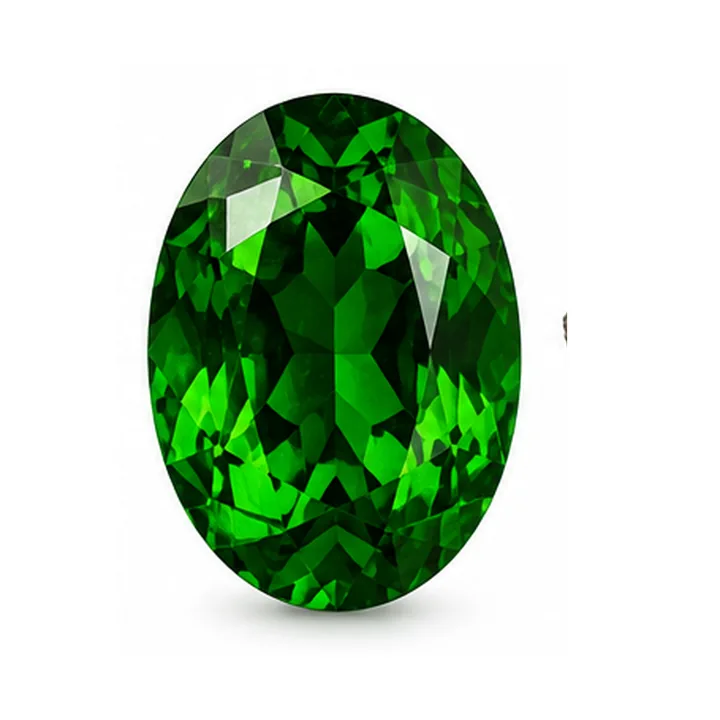 A study in colour and character
Every shade has a story.
Typical appearances for Chrome Diopside. Natural stones vary, and lighting or treatment can change their appearance.
Where Chrome Diopside is found
Russia; Pakistan
 Russia
 Pakistan
These are representative geological or commercial sources, not certified provenance for an individual stone. Country of origin should be substantiated independently when relevant to value.
01 / THE GEM AT A GLANCE
What is Chrome Diopside?
Chrome diopside is a chromium-coloured green variety of diopside, a pyroxene mineral. Bright forest and emerald-like green transparent pieces are used as affordable coloured gems, but they differ in identity and durability from emerald or tsavorite garnet.
Chrome diopside gains its vivid green colour from chromium and is often cut into bright transparent gems. Typical material appears in rich forest to emerald green shades, and is commonly described as chromium-bearing diopside. The Mohs hardness for this material is approximately 5.5–6.5; hardness refers to resistance to scratching, not to breaking, cleavage or sensitivity to chemicals. Its hue may resemble emerald or tsavorite, but it is a different and generally less wear-resistant mineral. Typical geological or commercial source regions include Russia; Pakistan; this does not establish the provenance of an individual gem. Protect from scratches and impacts; choose settings with some edge coverage and use mild hand cleaning. Ask for confirmation of identity, natural or lab-created status, and any treatments when choosing an individual stone.
02 / LOOK CLOSER
Colour, appearance and quality
Look for an appealing green colour that remains lively face-up, without excessive darkness, windowing or obvious abrasions. In a darker stone, clever photography can hide a nearly black centre, so request daylight-equivalent images.
Before you choose a stone
Compare images taken in more than one lighting condition, ask for views of the actual item and check how the cut and setting change its appearance. A gemstone type is not a standard grade: each natural specimen has its own colour, inclusions and workmanship.
THE GEMHOOD BUYER'S FIELD NOTES
How to choose Chrome Diopside: three checks
- 01
Verify the exact mineral identity and whether any treatment or repair is disclosed. Ask whether the material is chrome diopside rather than emerald, tourmaline or green glass.
- 02
Compare actual-item photographs and note hardness 5.5–6.5, chips, inclusions and whether the surface is damaged.
- 03
Choose use appropriate to the stone's durability: Earrings and pendants suit the gem's vivid colour and limit frequent impacts. Mohs hardness around 5.5–6.5 and cleavage concerns make exposed daily-wear rings a less forgiving choice.
Ask whether the material is chrome diopside rather than emerald, tourmaline or green glass. Request disclosure of treatments and a competent gemological identification for valuable lots.
Earrings and pendants suit the gem's vivid colour and limit frequent impacts. Mohs hardness around 5.5–6.5 and cleavage concerns make exposed daily-wear rings a less forgiving choice.
These notes describe typical gem material and trade practices. They do not independently grade or identify a specific item offered for sale.
03 / BUY WITH CONFIDENCE
Natural, laboratory-grown, treated or imitation?
Ask whether the material is chrome diopside rather than emerald, tourmaline or green glass. Request disclosure of treatments and a competent gemological identification for valuable lots.
These distinctions should be clear in the listing for any particular gem. Treatments are not automatically unacceptable, but an undisclosed treatment, vague mineral identity or unsupported origin claim prevents an informed purchase. Where material identity materially affects value, an independent gemological identification report may be worth considering.
A CLOSER LOOK
Comparing three green gemstones
Emerald is green beryl; tsavorite is green grossular garnet; chrome diopside is a pyroxene. Similar photographs cannot establish that they wear or sell in the same way.
Ask first for the exact material name, then compare colour, transparency, cutting and setting suitability for that mineral.
A CLOSER LOOK
Checking overly dark faceted stones
A bright green photo may use intense lighting through the pavilion. Evaluate the gem face-up against neutral surroundings and ask if it remains green in ordinary indoor lighting.
Cracks or abrasions at facet edges can be clues about handling; inspect rather than assuming the nominal hardness prevents damage.
04 / WEAR IT WELL
Chrome Diopside in jewellery
Earrings and pendants suit the gem's vivid colour and limit frequent impacts. Mohs hardness around 5.5–6.5 and cleavage concerns make exposed daily-wear rings a less forgiving choice.
05 / MAKE IT LAST
How to care for Chrome Diopside
Use gentle hand cleaning only and dry thoroughly. Avoid ultrasonic or steam methods, temperature extremes and knocking the stone against hard surfaces.
One essential care distinction
Mohs hardness describes resistance to scratching, not resistance to breaking. Gemstones with cleavage, existing fractures, porous surfaces or fillings can need extra care regardless of their hardness number. If you do not know whether a piece has been treated, begin with the gentlest appropriate cleaning method.
06 / CULTURE & MEANING
History, heritage and symbolism
Saturated transparent green pyroxene has become familiar in gem markets. Its value proposition is attractive colour with a distinct mineral identity, not a claim that it is a lower-cost form of emerald.
Chrome Diopside is included in this educational directory for its distinctive material, appearance and cultural or collector interest. Chrome diopside gains its vivid green colour from chromium and is often cut into bright transparent gems. Gem varieties and trade names can overlap: the precise identity of a particular specimen should be independently confirmed when relevant.
Traditional meanings and spiritual associations are part of cultural storytelling. They are not evidence that a gemstone diagnoses, prevents or treats any medical condition.
GOOD QUESTIONS, CLEAR ANSWERS
Chrome Diopside FAQs
What is Chrome Diopside?
Chrome diopside is a chromium-coloured green variety of diopside, a pyroxene mineral. Bright forest and emerald-like green transparent pieces are used as affordable coloured gems, but they differ in identity and durability from emerald or tsavorite garnet.
How hard is Chrome Diopside?
The usual quoted Mohs scratch hardness is 5.5–6.5. Hardness alone does not describe toughness, fracture risk or stability.
Where is Chrome Diopside found?
Representative reported regions include Russia; Pakistan. These are general occurrences, not proven origins of a specific item.
How should I care for Chrome Diopside?
Use gentle hand cleaning only and dry thoroughly. Avoid ultrasonic or steam methods, temperature extremes and knocking the stone against hard surfaces.
A NOTE FROM THE GEMHOOD EDITORIAL DESK
How to use this guide
We explain gemstone properties, known mining regions and customary treatments to help you shop more confidently. Each gemstone can vary in quality and individual provenance, so compare the actual jewellery listing and request supporting documentation if origin, treatment or natural-versus-laboratory-grown status affects your choice.
Our gemstone library is educational and does not act as a laboratory identification certificate. Independent gemological assessment is advisable for valuable or disputed claims.
EDITORIAL REFERENCES
Research and further reading
References describe mineral species and representative occurrences, not verification of any individual item for sale.
No matching jewellery is currently in stock. Explore the guide or browse our full collection.
Browse jewellery →UNDERSTAND THE DIFFERENCE
Compare Chrome Diopside with similar gemstones
These stones can overlap in colour, appearance or jewellery use. The mineral identity, treatments and durability may be very different.
KEEP EXPLORING
Other gemstones to discover
Educational articles describe gemstone types and common trade practices. They are not individual gemological certificates, current price appraisals or medical advice.