
THE GEMHOOD EDITORIAL LIBRARY
Clear Quartz gemstone guide
Clear quartz is the colourless, transparent macrocrystalline form of quartz, silicon dioxide (SiO₂). It is often called rock crystal. Naturally grown crystals commonly have six-sided prism faces and pointed terminations, although the visible form can be modified by intergrowth, damage and geological conditions. Quartz has a Mohs scratch hardness of 7 and lacks prominent cleavage; that combination makes sound material practical for many polished objects and jewellery designs. The colourless appearance does not certify that a polished stone is naturally mined: glass, synthetic quartz and other transparent gems can look similar in photographs.
Gem facts · Quality considerations · Care & meaning
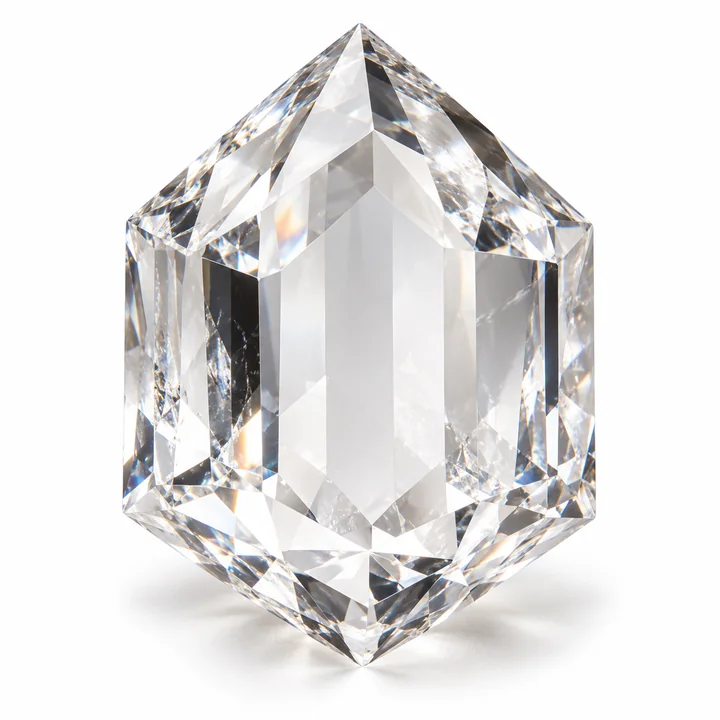 A study in colour and character
Every shade has a story.
Typical appearances for Clear Quartz. Natural stones vary, and lighting or treatment can change their appearance.
Where Clear Quartz is found
Widely distributed worldwide; representative collector occurrences include Brazil, Madagascar, the United States and the European Alps.
 Brazil
 Madagascar
 United States
How it forms
Quartz grows as silica-bearing solutions or magmas crystallise under suitable pressure and temperature conditions. Crystals may form in veins, cavities and pegmatites, while microcrystalline quartz develops in many other environments.
These are representative geological or commercial sources, not certified provenance for an individual stone. Country of origin should be substantiated independently when relevant to value.
01 / THE GEM AT A GLANCE
What is Clear Quartz?
Clear quartz is the colourless, transparent macrocrystalline form of quartz, silicon dioxide (SiO₂). It is often called rock crystal. Naturally grown crystals commonly have six-sided prism faces and pointed terminations, although the visible form can be modified by intergrowth, damage and geological conditions. Quartz has a Mohs scratch hardness of 7 and lacks prominent cleavage; that combination makes sound material practical for many polished objects and jewellery designs. The colourless appearance does not certify that a polished stone is naturally mined: glass, synthetic quartz and other transparent gems can look similar in photographs.
02 / LOOK CLOSER
Colour, appearance and quality
Compare transparency, distribution of natural inclusions, cracks, polish, proportions and the accuracy of the listing. A faceted clear quartz may show a windowed centre if cut too shallow, while a well-shaped crystal cluster can be valuable to a collector for undamaged terminations and undisturbed growth. Internal veils and mineral inclusions can be attractive features rather than automatic defects, but a fracture that reaches the surface may affect stability. High-quality studio lighting can make a clear stone look more brilliant than it appears in ordinary daylight, so request several views of the actual item.
Before you choose a stone
Compare images taken in more than one lighting condition, ask for views of the actual item and check how the cut and setting change its appearance. A gemstone type is not a standard grade: each natural specimen has its own colour, inclusions and workmanship.
THE GEMHOOD BUYER'S FIELD NOTES
How to choose Clear Quartz: three checks
- 01
Confirm whether the offered piece is natural quartz, synthetic quartz, glass or an imitation; ask for all treatments and repairs.
- 02
Inspect the exact object for cracks, glued tips, cloudy patches, surface wear or a strongly windowed cut.
- 03
Match the setting to intended use; a protected pendant tolerates different impacts from a projecting crystal-point ring.
The product name crystal does not prove that an item is mined quartz or provide evidence for any origin claim.
Smooth beads and protected faceted settings suit frequent wear better than exposed points and fragile clusters.
These notes describe typical gem material and trade practices. They do not independently grade or identify a specific item offered for sale.
03 / BUY WITH CONFIDENCE
Natural, laboratory-grown, treated or imitation?
Ask whether the item is natural rock crystal quartz, laboratory-grown quartz, glass or another colourless mineral. A 'crystal' product name alone does not identify the substance. Transparent glass is typically softer and may show different bubbles, but bubbles and visual appearance are not conclusive tests. Some quartz items are coated, dyed, artificially irradiated or otherwise processed. Natural versus lab-grown status and all material treatments should be disclosed in plain language. For an important purchase, rely on competent mineral or gemological identification, not social-media identification tricks.
These distinctions should be clear in the listing for any particular gem. Treatments are not automatically unacceptable, but an undisclosed treatment, vague mineral identity or unsupported origin claim prevents an informed purchase. Where material identity materially affects value, an independent gemological identification report may be worth considering.
A CLOSER LOOK
What is the difference between clear quartz, glass and diamond?
Clear quartz is crystalline silicon dioxide, glass is an amorphous material whose composition varies, and diamond is crystalline carbon. All can appear transparent, but their hardness, refractive behaviour, structure and value differ. Diamond is substantially harder than quartz; colourless quartz is not a substitute for a diamond certificate.
A photograph cannot conclusively distinguish all three. If a listing uses only 'clear crystal' without mineral identification, request the exact material, whether it is natural or manufactured, and any relevant laboratory documentation.
A CLOSER LOOK
How does rock crystal form?
Quartz grows when silica-bearing fluids or melts deposit silicon dioxide under suitable geological conditions. It is common in veins, pegmatites and many other rock environments. Crystals can grow into open spaces and develop recognisable prism faces and pointed ends, while restricted growth can create intergrown or massive forms.
Quartz occurs worldwide, including notable occurrences in Brazil, Madagascar, the United States and the Alpine region. These are illustrative sources only. Without traceable collection records or specialised evidence, the geographical origin of a particular clear crystal should not be treated as established.
A CLOSER LOOK
Clarity, inclusions and responsible presentation
The most transparent piece is not always the most interesting. Needles, internal veils, phantom growth zones and trapped mineral inclusions can make individual quartz specimens desirable to collectors, provided the material is accurately identified.
Request natural-light images and close views of the exact object. For clusters, ask whether tips have been repaired or the base has been reconstructed. For faceted jewellery, check face-up brightness, windowing, polish, dimensions and actual setting condition.
A CLOSER LOOK
Choosing quartz for jewellery or gifts
Match the object to how it will be used. A smooth bead strand or protected pendant is less exposed than a sharply pointed cluster ring. Secure mountings matter more than a crystal's popularity or symbolic name.
For gifting, tell the recipient whether the piece is natural quartz or another material and include sensible care instructions. Traditional symbolism can be shared as cultural background without promising physical or medical outcomes.
04 / WEAR IT WELL
Clear Quartz in jewellery
Clear quartz can work well in polished beads, pendants, earrings and protected rings. Its Mohs hardness 7 gives useful scratch resistance, but pointed crystal tips, thin corners, existing fractures and delicate mountings can still chip or break. Ask whether a dramatic crystal point is safely secured, especially in a pendant or an open-setting ring. For regular daily wear, a rounded cabochon or well-protected faceted cut is usually more forgiving than an exposed point.
05 / MAKE IT LAST
How to care for Clear Quartz
Wash solid, untreated clear quartz gently with lukewarm water and a small amount of mild soap; wipe with a non-abrasive cloth and dry completely. Keep it separate from diamonds, corundum and other harder gems that can scratch it. Avoid blows to pointed terminations and sudden temperature changes. Do not assume that a glued cluster, coated stone, treated item or jewellery setting can tolerate soaking, ultrasonic cleaning or steam. When treatments or adhesives are unknown, ask the seller for care guidance first.
One essential care distinction
Mohs hardness describes resistance to scratching, not resistance to breaking. Gemstones with cleavage, existing fractures, porous surfaces or fillings can need extra care regardless of their hardness number. If you do not know whether a piece has been treated, begin with the gentlest appropriate cleaning method.
06 / CULTURE & MEANING
History, heritage and symbolism
Rock crystal has appeared in decorative objects, carvings and jewellery across many cultures. Historical writers connected the Greek word krystallos with the idea of lasting ice, but natural quartz is formed by geological processes, not frozen water. Clear quartz also has an important scientific and industrial history due to its crystal properties. Modern claims that clear quartz heals disease or reliably changes health are cultural or marketing statements, not established medical effects.
Traditional meanings and spiritual associations are part of cultural storytelling. They are not evidence that a gemstone diagnoses, prevents or treats any medical condition.
GOOD QUESTIONS, CLEAR ANSWERS
Clear Quartz FAQs
Is clear quartz the same as rock crystal?
Yes. Rock crystal is a common name for transparent colourless macrocrystalline quartz, whose chemical composition is SiO₂.
How hard is clear quartz?
Quartz is Mohs 7. That is resistance to scratching, not a guarantee against chipping or fracture.
Does quartz come from Brazil?
Quartz occurs worldwide, including Brazil, but the existence of deposits does not establish the source of a specific item.
Can clear quartz be worn every day?
Sound quartz in a protective setting can suit many jewellery uses; exposed crystal tips and weak mountings need extra caution.
Is clear quartz a form of diamond?
No. Clear quartz is silicon dioxide; diamond is crystalline carbon. They can both be colourless but are different minerals.
Can clear quartz be laboratory-grown?
Yes. Hydrothermal synthetic quartz exists. Sellers should distinguish natural mined quartz from laboratory-produced material.
What is the safest cleaning method?
For solid untreated quartz, mild soap, lukewarm water and a soft cloth are sensible; avoid ultrasonic cleaning if fractures, coatings or adhesives are suspected.
Does clear quartz have proven healing powers?
No medical benefit should be inferred from traditional gemstone symbolism. A gemstone is not a substitute for appropriate medical care.
A NOTE FROM THE GEMHOOD EDITORIAL DESK
How to use this guide
We explain gemstone properties, known mining regions and customary treatments to help you shop more confidently. Each gemstone can vary in quality and individual provenance, so compare the actual jewellery listing and request supporting documentation if origin, treatment or natural-versus-laboratory-grown status affects your choice.
Our gemstone library is educational and does not act as a laboratory identification certificate. Independent gemological assessment is advisable for valuable or disputed claims.
EDITORIAL REFERENCES
Research and further reading
References describe mineral species and representative occurrences, not verification of any individual item for sale.
No matching jewellery is currently in stock. Explore the guide or browse our full collection.
Browse jewellery →UNDERSTAND THE DIFFERENCE
Compare Clear Quartz with similar gemstones
These stones can overlap in colour, appearance or jewellery use. The mineral identity, treatments and durability may be very different.
KEEP EXPLORING
Other gemstones to discover
Educational articles describe gemstone types and common trade practices. They are not individual gemological certificates, current price appraisals or medical advice.